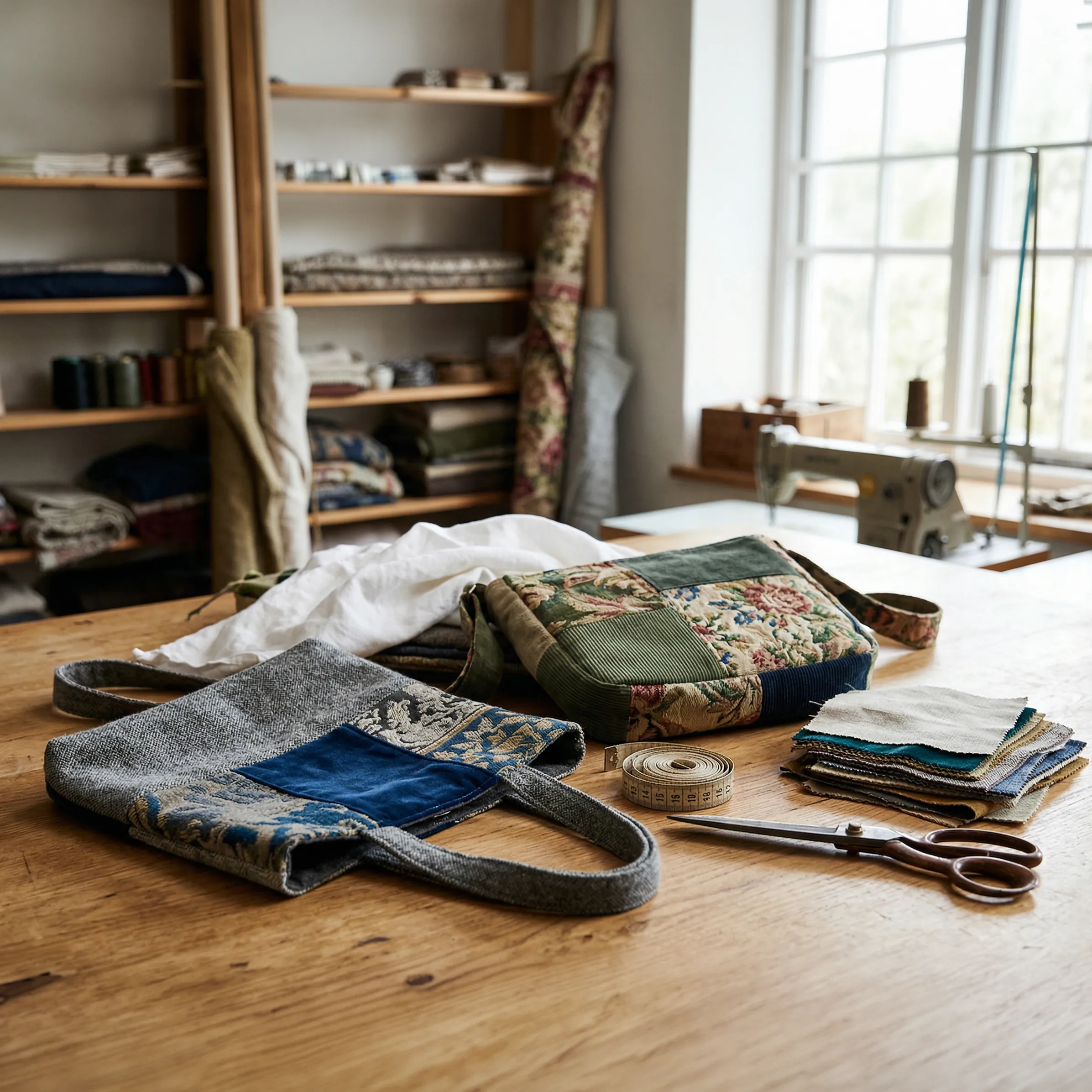
Unique accessories require special care.
Hi! If one of our pieces has found a home in your wardrobe, it means you value not only design but also a responsible approach to fashion. Each of our products is the result of passion and a philosophy of upcycling, where we give second life to high-quality fabric scraps. The choice of upholstery fabrics is deliberate – these are exceptionally durable materials designed to withstand years of intensive use on furniture. However, to ensure your favorite accessory retains its luster, it’s worth knowing how to care for your bag consciously and gently.
At Scoiattolo, we create unique bags, each made in a single piece. This means you’re holding a product that simply can’t be replaced with a new, mass-produced one. That’s why we’ve prepared this guide – so you can enjoy your bag for many seasons, caring for it in a less wasteful way.
Golden rules for caring for upholstery fabrics
Upholstery fabrics like velvet, jacquard, and corduroy have a unique structure. While they’re abrasion-resistant, they’re not particularly well-suited to harsh chemicals and high temperatures. If you’re wondering about general care guidelines for products from our studio, start with these steps:
- Occasional cleaning: Most everyday dirt, such as dust and dirt, is best removed with a dry, soft brush or a lint roller.
- Avoid the washing machine: Our bags are not designed for machine washing. High temperatures and spinning may damage the material and shape of the bag.
- React quickly: A fresh stain is easier to remove than one that has already penetrated deep into the fibers.
How to clean stains without damaging the material?
When a spill does happen, gentleness is key. Forget harsh scrubbing—it’s a surefire way to damage the material’s texture, especially on delicate velvets. Instead, use a spot-cleaning method.
Use lukewarm water and a very mild detergent (e.g., dish soap). Dampen a soft cloth and gently press it onto the stained area, working from the outside in. Remember to let the bag dry naturally at room temperature afterwards. Avoid placing it directly on a radiator, which could cause deformation. For detailed information on what is acceptable, always refer to our hand-cleaning instructions.
Storage and daily use
How you care for your bag also impacts how you store it. Upholstery fabrics, while durable, don’t like prolonged exposure to bright sunlight, which can cause colors to fade. When not in use, it’s best to store your bag in a dry, shaded place.
It’s also worth considering the product’s intended use. Our bags are perfect for everyday essentials—a book, a bottle of water, or a wallet. However, try not to overload them to preserve the original shape of the handles and seams. By paying attention to these details, you ensure that your handicrafts age gracefully, acquiring a refined character.
Summary – the joy of handicraft for years to come
Caring for upcycled products isn’t just a responsibility, but also part of a lifestyle based on respect for the work of human hands and the planet’s resources. Remember to refresh the material regularly and avoid drastic cleaning methods, and your bag will reward you with a pristine appearance.
If you’re looking for more unique, handcrafted accessories that will stand out from the crowd and stay with you for a long time, we invite you to visit our workshop regularly. Every scrap of fabric we salvage has the potential to become your new favorite everyday companion.